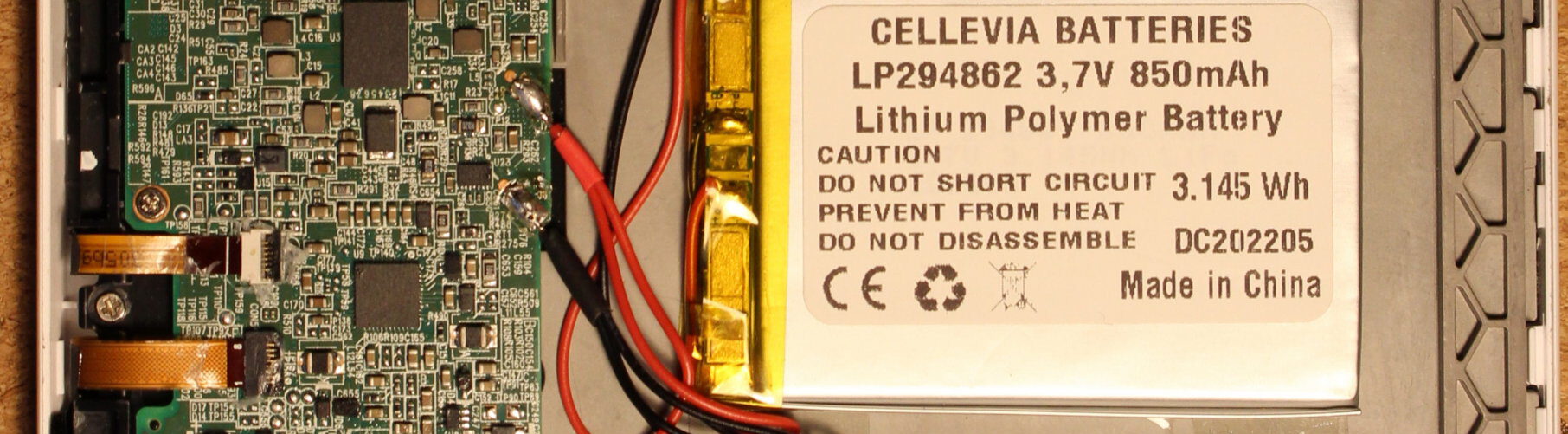
A good friend of mine has a Kobo Libra e-reader that did not turn on or charge anymore. I repaired it.
I expected a broken connection between battery and e-reader electronics, perhaps after a fall, or a defective USB connector (as that is used for charging), but it turned out the battery itself was defective. The battery consists of a lithium pouch cell and a protection circuit-board, and the the connection from the battery cell to this board was torn right at the edge of the cell. That connection is a thin aluminium tab. The tab is spot-welded to the protection board. That board then has regular wire soldered to it, which attaches to the rest of the e-reader electronics – the protection board is ‘part of the battery’.
Soldering on Lithium batteries is a no-no, and aluminium cannot be soldered with regular electronics solder anyway. The bit of tab left on the cell was also to tiny to reliably clamp something to. So, the best solution was to replace the battery.
The original battery uses a “158089” size cell 1200mAh 3.7V, with a few extra labels and numbers: PR-158098N 9636922213003682 (8-003) K24 06A3198FA013833.
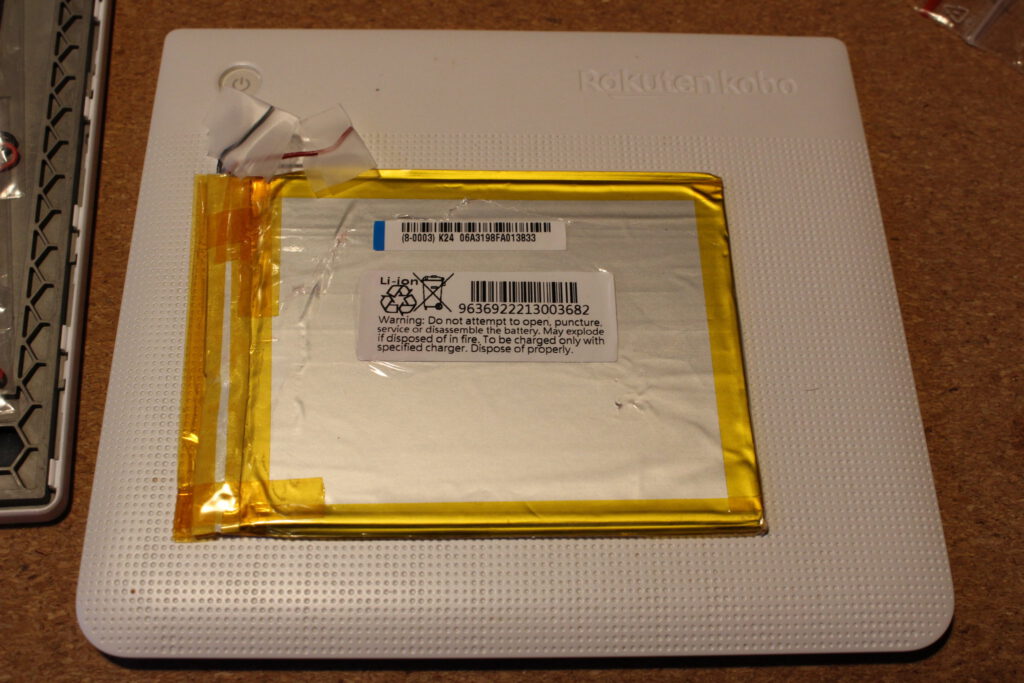
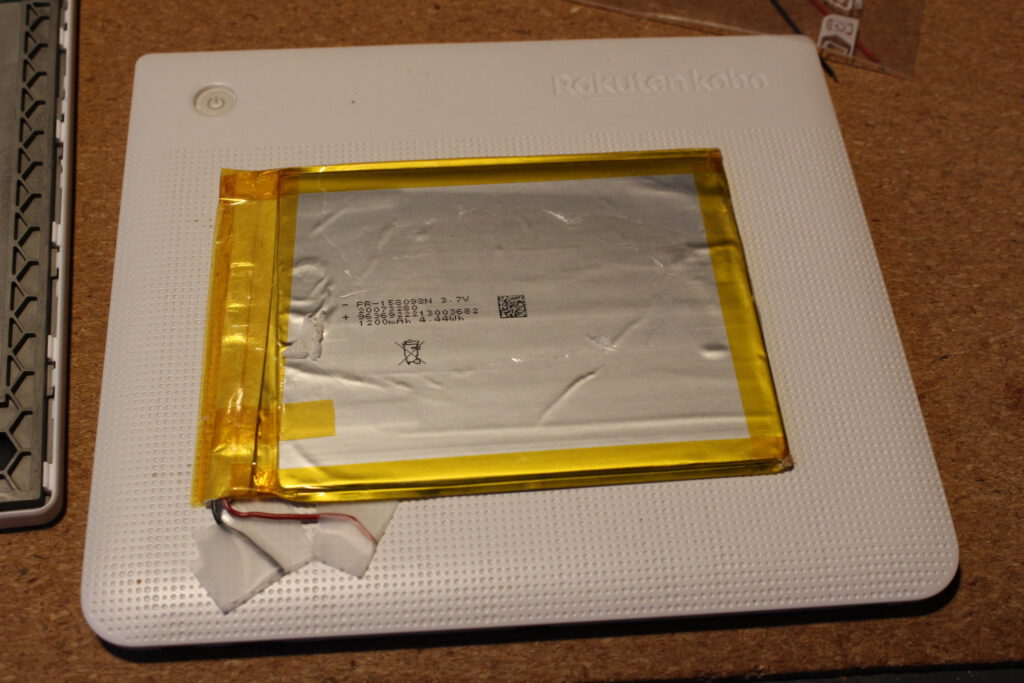
An internet search for “replacement battery for Kobo Libra” did not yield much usable results: mostly posts from others also looking for a replacement battery. So I’m writing this post to show a usable alternative I’ve found, in the hope it’ll perhaps be useful to someone somewhere.
I found batteries for other Kobo e-readers (but not for the Libra), and on approximately the other side of the planet from my location: Canada. (shipment by air of lithium batteries is difficult).
The battery I eventually found, bought and used is the Cellevia LP294862, from TME: ACCU-LP294862/CL. Mostly as I bought a few other parts there anyway, but you might be able to find it at your favorite ‘local’ supplier (For me, that normally would’ve been nkon.nl, but they did not have this particular type of cell, I even asked their customer service).
I did not find an exact replacement. The original battery is 4.44 Wh (1200 mAh). The LP294842 is 3.145 Wh (850 mAh), so I’ve used 2 wired in parallel for a total of 6.29 Wh (1700 mAh). They fit side by side in the e-reader and are attached using a bit of double sided tape and the glue left from the tape that attached the original battery. Both original and replacement batteries include protection electronics.
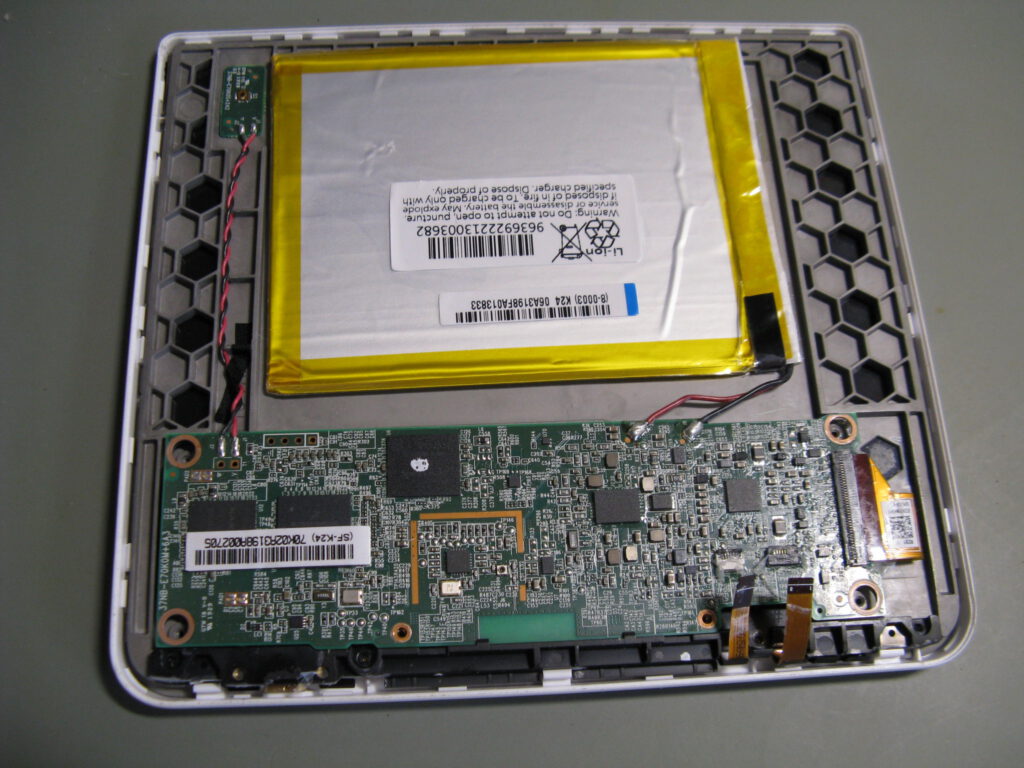
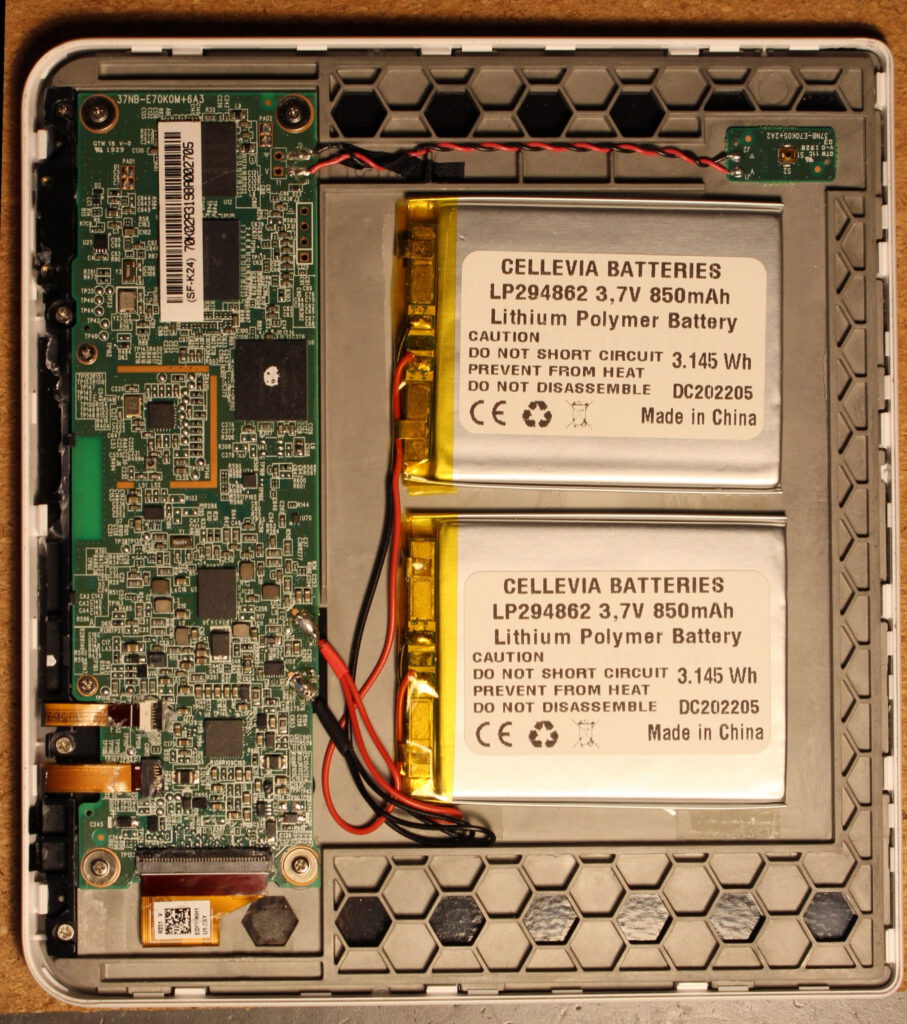
The new batteries are about 3 mm thick (that is including the protection electronics, the cell itself is 2.9 mm x 48 x 62 mm. Similarly the original cell size can be seen in the 158089 number: 1.5x80x89 mm). This thickness still fits, but probably only because they don’t extend to the very edge of the battery ‘compartment’. The battery compartment is about 104×80 mm, with a height of something between 2 and 3 mm.
The e-reader now functions (and charges) again. For others willing to repair theirs, a few thoughts:
- To open the enclosure, run a fingernail (or guitar plectrum or plastic card or suitable tool) around the seam at the edges to push open the retaining clips without breaking them.
- The new battery is NOT waterproof.
- Neither is the rest of the e-reader, after soldering on the new battery connections, even if the coating on the board is still undamaged in other places.
- When replacing a battery that needs to be pried out of glue, discharge the battery first, as to have as little energy as possible in it in case the prying causes an internal short.Try not to bend it. Sliding a plastic (nonconductive, blunt) card under it might help to pry it loose without bending.
- Insulate the wires of the old battery before proper disposal.


Leave a Reply to mh1985 Cancel reply